When to Replace Safety Boots: 6 Signs to Check
As an Amazon Associate, BetterPick Hub earns from qualifying purchases on Amazon.ca.
As an Amazon Associate, BetterPick Hub earns from qualifying purchases. Our picks are based on manufacturer and retailer specifications, not hands-on testing.
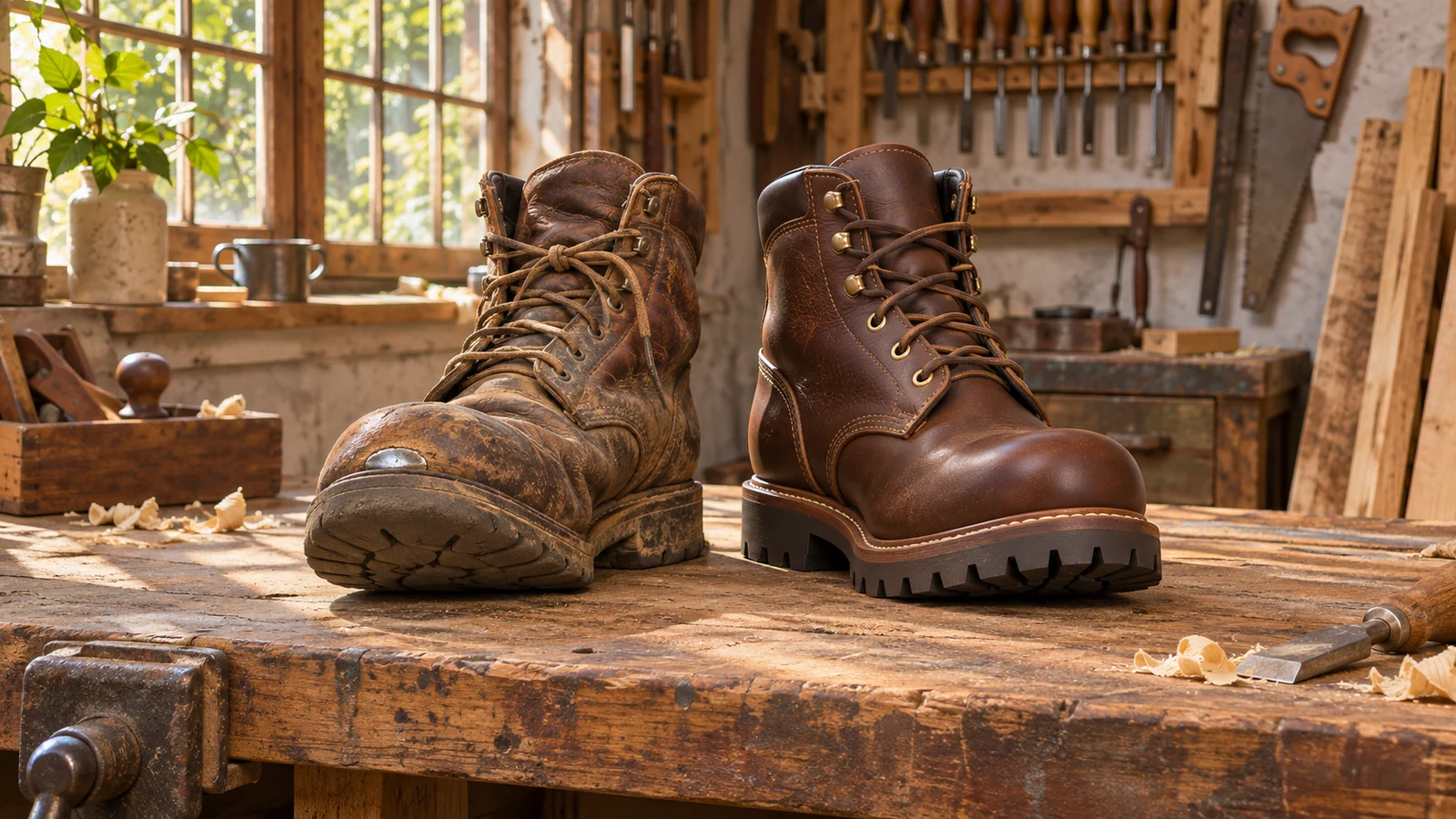
This guide is for anyone in Canada wearing CSA safety boots who is wondering whether the old pair still does its job. The short answer: there is no fixed month count. You replace safety boots when they show damage that could affect protection, and right away after a heavy impact or a sole puncture, even if they look fine.
That answer comes from Canadian safety guidance. The Canadian Centre for Occupational Health and Safety (CCOHS) says to inspect footwear regularly for cracks in soles, breaks in leather or exposed toe caps, and to repair or replace worn or defective footwear. The SaskPower foot protection standard puts it in four words: “If in doubt, replace.”
Below are the six signs to check, what to do about each one, and four CSA-certified boots to consider when it is time for a new pair.
Quick Takeaway: Replace safety boots after any heavy impact or sole puncture, when the toe cap shows through, when soles or uppers crack, or when the tread is worn smooth. If your boots carry the omega (ESR) mark, CCOHS warns that electric shock resistance is greatly reduced by wet conditions and wear.
Quick Picks
- If you need a taller 8-inch boot with the green triangle and omega marks: Kodiak Berg 8” Waterproof Composite Toe Safety Work Boot
- If you need a boot you can resole instead of replacing: Red Wing Burnside #3517
- If you need a steel toe that is lighter than the Burnside: Red Wing Cinder #5902
- If you need a wide-only composite-toe boot: Timberland PRO Boondock Ultralight CSA 6” (TB0A63GKEDX)
- Who should not buy any of these: if your site requires a metatarsal guard, a chainsaw-protection mark or insulation rated for deep cold, none of these product pages list those features, so look for a boot whose page confirms the exact mark your job needs.
The 6 Signs It Is Time to Replace Your Safety Boots
1. Something heavy hit the toe
CCOHS says footwear exposed to sole penetration or impact may not have visible signs of damage, and that it is therefore advisable to replace footwear after an event. The University of Toronto’s protective footwear standard, which is based on CSA Z195.1-16 (the CSA guideline on selection, care and use of protective footwear), says the same: if footwear has been exposed to sole penetration or severe impact, it should be replaced even if there are no outward signs of damage.
A boot maker agrees. In an EHS Today article, Wolverine’s director of design advises replacing impact-resistant safety footwear anytime something heavy is dropped on it.
So if a pallet, pipe or tool lands on your toe, plan on a new pair, even if the leather barely shows a scuff.
2. The toe cap is showing
An exposed toe cap is one of the three damage examples CCOHS lists. If the leather or rubber over the toe has worn through and you can see the cap, the boot belongs on the replace pile. Every workplace standard we used lists exposed toecaps as something to inspect for.
3. The soles are cracked or the tread is worn smooth
CCOHS names cracks in soles as damage to look for. Tread wear matters too. In the same EHS Today article, a North Safety Products executive compares a worn tread to a tire: when it gets really smooth, it is time to replace it.
The University of Toronto standard also says treads should be kept clean to maximize slip resistance, so clean the sole before you judge it.
4. The uppers are split or broken
CCOHS lists breaks in leather, and the University of Toronto standard lists breaks in the upper. Some damage can be repaired, which is why CCOHS says “repair or replace.” If you are not sure a repair will hold, follow SaskPower’s rule and replace.
5. A nail or sharp object went through the sole
Sole penetration is treated the same way as a toe impact. CCOHS says footwear exposed to sole penetration may not show visible damage and advises replacement after the event. If you step on a nail and it gets through, do not keep wearing that pair.
6. Your ESR boots are worn or have been wet a lot
ESR means electric shock resistant. CCOHS says the white rectangle with an orange Greek letter omega indicates electric-shock protective footwear, and it warns that this resistance deteriorates with wear and in a wet environment. Elsewhere on the same page, CCOHS says electric shock resistance of footwear is greatly reduced by wet conditions and wear.
If your job requires ESR footwear, keep that warning in mind when you inspect a worn pair. Your employer’s electrical safety rules, not the boot, decide what electrical work you can do.
Is There a Set Replacement Schedule?
No. CCOHS does not give a replacement interval, and Wolverine’s director of design told EHS Today there is no universal schedule because job hazards, how often you wear the boots, and the worker’s size and weight all matter.
What the guidance does say is to check often. SaskPower’s standard says protective footwear shall be inspected for damage that could affect its ability to provide protection before each use. The University of Toronto standard adds a point many people miss: footwear will deteriorate over time even when not worn. A pair that sat in a truck for two seasons still needs a close look.
How to Check Your Boots in Two Minutes
Do this at the start of a shift, or at least whenever the boots get a hard day:
- Clean the soles. Knock off mud and grit so you can see the tread.
- Look at the toe. Check for a dent, a crack or any spot where the cap shows through.
- Flex the sole. Look for cracks across the bottom and where the sole meets the upper.
- Check the uppers. Look for breaks in the leather, open seams and holes.
- Think back. Did anything heavy land on the toe, or did anything go through the sole? If yes, replace.
- Check the mark. If your boots carry the omega mark, remember that CCOHS says wear and wet conditions greatly reduce electric shock resistance.
To get more life out of a good pair, CCOHS suggests using a protective coating to make footwear water-resistant. Our guide to waterproofing leather work boots covers products for that. The University of Toronto and SaskPower standards both say to clean and store footwear according to the manufacturer’s instructions.
One more point from the University of Toronto standard: footwear deemed unsafe should be destroyed, not recycled for other uses such as personal use. Do not hand an impacted pair down to someone else.
Comparison: Four CSA Replacement Boots
| Boot | Safety toe | CSA rating listed | Height | Weight listed | Widths | Resoleable |
|---|---|---|---|---|---|---|
| Kodiak Berg 8” | Non-metallic composite | Grade 1; green triangle and omega marks | 8” | Not listed | Not listed | Not listed |
| Red Wing Burnside #3517 | Non-metallic | CSA Grade 1, ESR Rated, PR | 6-inch | 4 lbs. 4 oz. | Regular (D), Wide (EE), Wide (H) | Yes |
| Red Wing Cinder #5902 | Steel | CSA Grade 1, ESR Rated, PR | 6-inch | 2 lbs. 7 oz. | Regular (M), Wide (W2) | No |
| Timberland PRO Boondock Ultralight CSA 6” | Composite | CSA Approved; grade not listed | 6” | 837 g per size 9 boot | Wide only | Not listed |
If the CSA marks are new to you, our guide to CSA safety boot symbols explains each one. In short, CCOHS says the green triangle indicates sole puncture protection with a Grade 1 protective toecap.
Kodiak Berg 8” Waterproof Composite Toe Safety Work Boot
Who it suits: workers who want an 8-inch boot and whose job calls for both puncture protection and an ESR boot.
The retailer product page lists a non-metallic composite safety toe rated CSA Z195-14 Grade 1 and ASTM F2413 I/75 C/75, a composite plate, and both the CSA green triangle and the white rectangle with an orange omega. The upper is listed as premium waterproof full grain leather over a waterproof membrane with full-bootie construction.
The page also lists a molded TPU toe and heel guard. The outsole is listed as oil- and slip-resistant rubber tested to the CSA Z195 slip resisting standard. Other listed features are a lightweight cushioning PU midsole and a REKOVER anti-fatigue footbed, in sizes 7 to 15.
What to know: the page does not list widths or an insulation rating. The product page we used showed no buyer reviews, so we have no review pattern to report.
Red Wing Burnside #3517
Who it suits: people who wear out soles before uppers and would rather resole than replace.
Red Wing’s page lists the Burnside as resoleable, with Direct Attach to Welt construction. That matters for sign 3 above: CCOHS says “repair or replace,” and a boot built to be resoled gives you the repair option when the tread wears down. It does not change the rule for impacts. A boot that took a heavy hit to the toe still needs replacing.
The listed safety specs are a non-metallic toe, CSA Grade 1, ESR Rated, PR, and ASTM F2413-24, I/C, EH PR SRO. The outsole is a Vibram UltraSole, listed as meeting ASTM F3445 for slip resistance on oily and wet surfaces. The leather is nubuck, waterproof and waxed, with Red Wing Waterproofing and a fiberglass shank.
It comes in Regular (D), Wide (EE) and Wide (H), and Red Wing lists the weight at 4 lbs. 4 oz.
What to know: insulation is not listed. The product page we used showed no buyer reviews, so we have no review pattern to report.
Red Wing Cinder #5902
Who it suits: workers who want a steel toe in a lighter 6-inch boot.
The Cinder lists a steel toe with CSA Grade 1, ESR Rated, PR and ASTM F2413-24, I/C, EH PR SRO. Puncture resistance comes from a Lenzi PS5ES puncture resistant insole. The CinderGrip outsole is listed as meeting ASTM F3445 for slip resistance on oily and wet surfaces.
The upper is full grain, waterproof and waxed leather with a waterproof membrane, on Stitchdown-Cement construction. Red Wing lists the weight at 2 lbs. 7 oz., and widths in Regular (M) and Wide (W2).
What to know: Red Wing lists it as not resoleable, so worn soles mean a new pair. Insulation is not listed. The product page we used showed no buyer reviews, so we have no review pattern to report.
Timberland PRO Boondock Ultralight CSA 6” (TB0A63GKEDX)
Who it suits: people with wide feet who want a composite-toe boot.
The retailer page lists this model as CSA Approved, with a composite safety toe and electrical hazard protection shown with an electric-shock-resistant icon. The listed weight is 837 grams per size 9 boot. It comes in wide width only, in sizes 7 to 15.
For uppers that split, the page lists full-grain Timberland waterproof leather with abrasion-resistant Ever-Guard leather and molded TPU reinforcements, plus a waterproof, breathable membrane. The outsole is lightweight, non-marking All-Weather TPU, listed as heat-, oil-, slip- and abrasion-resistant. It uses a HoverSpring foam midsole and a non-metallic shank.
What to know: the retailer page does not state the CSA grade or name the CSA symbols, so check the label on the boot itself before you wear it on site. Insulation is not mentioned. The product page we used showed no buyer reviews, so we have no review pattern to report. More wide options are in our guide to work boots for wide feet.
Buying the Replacement Pair: Fit Tips
A new pair only helps if it fits. CCOHS gives these fit points:
- Try on new boots around midday, because feet normally swell during the day.
- Leave ample toe room. CCOHS says toes should be about 12.5 mm from the front.
- Do not expect footwear to stretch with wear.
- Try boots on with the socks or arch supports you usually wear at work.
- Check with the manufacturer if adding inserts affects your level of protection.
- Boots should fit snugly around the heel and ankle when laced.
Match the CSA mark to your job before you match the colour. If your site needs puncture protection, look for the green triangle. If your current pair has the omega mark because your job requires it, buy a replacement that lists ESR too. For a broader set of options, see our best work boots for Canadian job sites.
Once the new pair arrives, our guide on breaking in work boots without blisters can help with the first few weeks.
Who Should Buy What
- You need an 8-inch boot with both the green triangle and omega marks: Kodiak Berg 8”.
- You wear out soles and want to resole instead of replace: Red Wing Burnside #3517.
- You want a steel toe in a lighter boot: Red Wing Cinder #5902.
- You have wide feet and want a composite toe: Timberland PRO Boondock Ultralight CSA 6”.
- Your boots just took a heavy hit or a nail through the sole: any of the above, but replace the old pair now rather than later.
Sources & Technical References
- CCOHS: Safety Footwear
- University of Toronto EHS: Protective Footwear Standard: Selection, Use, and Care
- SaskPower: Foot Protection Standard
- EHS Today: Protective Footwear: Know When to Give Safety Shoes the Boot
- Men's Kodiak Berg 8" Waterproof Composite Toe Safety Work Boot (Safety Supplies Canada)
- Red Wing Burnside #3517
- Red Wing Cinder #5902
- Timberland PRO Boondock Ultralight CSA 6" WP Composite Toe (Work Authority)
Related Safety Boots Guides
Best Hiker-Style Safety Boots in Canada: 4 Top Picks
Compare 4 CSA Grade 1 hiker-style safety boots in Canada for agility and comfort, evaluating toe caps, puncture plates, waterproofing, and slip resistance.
Best Work Boots for Mechanics: 5 Oil-Resistant CSA Picks
Work boots for mechanics compared: five CSA Grade 1 boots and shoes with listed oil- and slip-resistant outsoles, by toe type, ESR or SD, weight and upper.

How Should Safety Boots Fit? A CSA Boot Sizing Guide
How safety boots should fit: toe room, width, heel hold and when to measure, from CCOHS and brand fit guides, plus three CSA boots sold in many sizes and widths.