Best Non-Slip Shoes for Kitchen Work: 5 Picks Compared
As an Amazon Associate, BetterPick Hub earns from qualifying purchases on Amazon.ca.
As an Amazon Associate, BetterPick Hub earns from qualifying purchases. Our picks are based on manufacturer specifications and buyer review patterns, not hands-on testing.
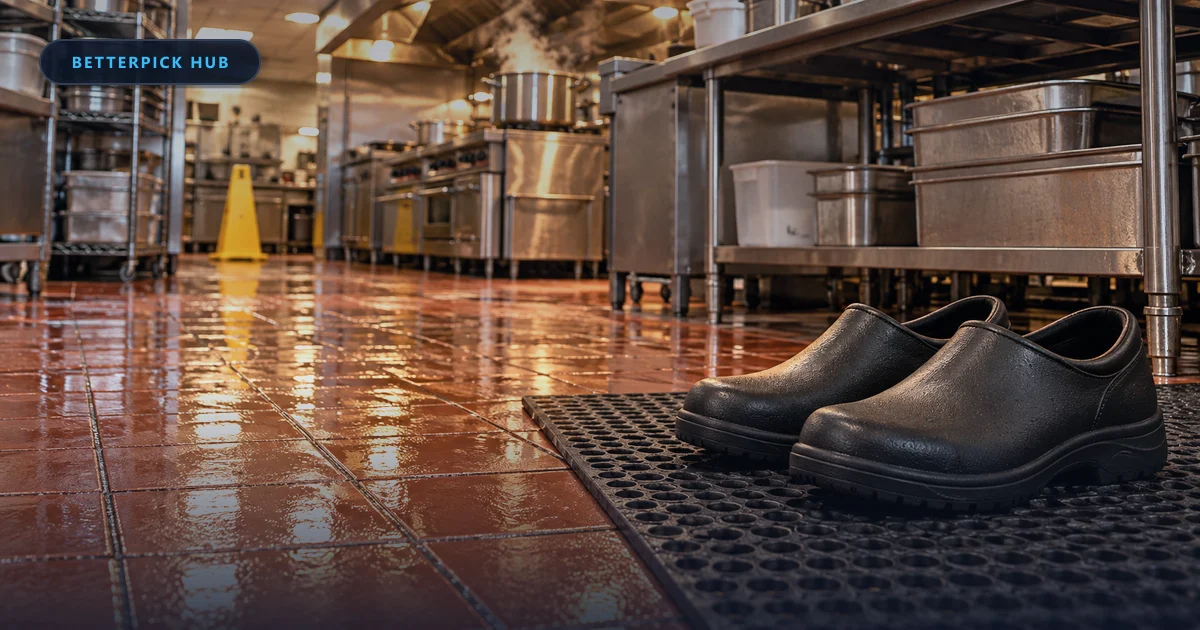
This guide is for cooks, dishwashers, servers and prep staff who stand on wet, greasy floors all shift and want a shoe with real grip. The quick answer: if you want a shoe with a published slip rating, start with the Shoes For Crews Cater II, the Shoes For Crews Everlight or the Skechers Work Nampa. All three are listed by their makers with an SRO-rated outsole, the rating for oily and wet floors. If you prefer a clog, the Dansko XP 2.0 has a slip-resistant rubber outsole that Dansko says suits dry, wet and oily/wet surfaces, and the Birkenstock Super-Birki is the only pick here with published washing and disinfecting temperatures. Neither of those two clog pages names a slip-resistance standard, and that matters, as explained below.
This article is about indoor floors: kitchens, dish pits, bars and dining rooms. Grip on snow and outdoor ice is a different problem, and none of these shoes is described by its maker as a winter or ice shoe.
Quick Picks
- If you need a leather shoe that looks right in the dining room: Shoes For Crews Cater II
- If you need the lightest shoe with a published SRO rating: Shoes For Crews Everlight
- If you need an athletic-style lace-up with extra toe room: Skechers Work Nampa
- If you need a slip-resistant clog for long line shifts: Dansko XP 2.0
- If you need a clog you can wash and disinfect: Birkenstock Super-Birki
- Who should not buy any of these: if your workplace requires a CSA-rated safety toe or a puncture-resistant sole, none of these product pages lists a toe cap or plate rating. Look at CSA safety footwear instead, starting with our guide to CSA safety boot symbols.
Comparison Table
| Shoe | Style | Slip claim on maker’s page | Standard named | Upper | Widths listed | Weight (per shoe) |
|---|---|---|---|---|---|---|
| Shoes For Crews Cater II | Men’s leather lace-up | SRO, for dry, wet, oily and greasy surfaces | ASTM F3445-24; ASTM F2913-24 test methods | Water-resistant leather | Medium | 15.03 oz |
| Shoes For Crews Everlight | Women’s knit sneaker | SRO | ASTM F3445-24; ASTM F2913-24 test methods | Water-resistant, breathable knit | Medium | 6.75 oz |
| Skechers Work Nampa | Men’s athletic lace-up | SRO, for wet, dry and oily surfaces | Not listed | Smooth synthetic | Medium | Not listed |
| Dansko XP 2.0 | Clog | Slip-resistant rubber outsole for dry, wet and oily/wet surfaces | Not listed | Leather; waterproof on this colourway | Medium; narrow and wide offered in some styles | Not listed |
| Birkenstock Super-Birki | Clog | Tractor-style edges for added traction | Not listed | Fluid-resistant PU | Regular/Wide | Not listed |
“Not listed” means the maker’s product page we used does not state it. It does not mean the shoe lacks the feature.
What “Slip-Resistant” Means on a Kitchen Shoe
Two terms do most of the work here, and both come from ASTM, a standards body. Shoes For Crews explains them plainly on its testing page.
ASTM F2913 is the test method, or “how grip is measured.” A finished shoe is clamped to an arm at the angle a real foot lands, pressed down and slid across a prepared floor. The resisting force divided by the pressing force gives the coefficient of friction. A higher number means more grip.
ASTM F3445 is the performance specification, the score a shoe needs to pass. It has two levels that matter in a kitchen:
- SR: a coefficient of friction of 0.40 or higher on dry and wet surfaces.
- SRO: everything SR requires, plus 0.33 or higher on an oily/wet surface. A shoe has to pass SR before it can be tested and labelled SRO.
For a kitchen, the “O” is the part to look for, because it is the oily-floor result.
Quick Takeaway: Shoes For Crews puts it bluntly: “slip-resistant” printed on a box without one of these marks is a claim, not a certification. It also says no non-skid shoe eliminates slip risk entirely, and that floor condition, contamination and pace still matter.
The Canadian Centre for Occupational Health and Safety (CCOHS) adds a practical tip: footwear is marked to show its level of slip resistance, and that marking may be on the packaging, on the footwear or on the product sheet. If a product page is vague, check the box and the label before your first shift.
That is why this guide separates the picks. Three shoes have a stated SRO rating. The two clogs describe a slip-resistant or added-traction outsole but do not name a standard on the page we used, so you are relying on the maker’s description rather than a published rating.
Shoes For Crews Cater II
Who it suits: servers, bartenders and kitchen staff who need a plain black leather shoe that passes a dress code, with a slip rating behind it.
Specs that matter:
- Outsole: Shoes For Crews’ TRACTIONiQ slip-resistant outsole, rated SRO under ASTM F3445-24 for dry, wet, oily and greasy surfaces.
- Test method: the details section says it is certified slip-resistant using ASTM F2913-24 test methods. The description elsewhere on the same page cites ASTM F2913-19, so the version is listed two ways.
- Upper: water-resistant leather, treated to temporarily stop liquids from seeping inside. “Temporarily” is the maker’s word, so treat it as spill protection, not a waterproof boot.
- Insole: removable. You can take it out to wash it or swap in an orthotic insole.
- Weight: 15.03 oz per shoe.
- Sizing: men’s sizes 7.5 to 14, Medium width only.
What buyers say: we did not find a review source for the Cater II, so we are not summarizing buyer feedback for it.
Watch for: only Medium width is listed. If you have wide feet, look at the Super-Birki or a wide Dansko style instead.
Shoes For Crews Everlight
Who it suits: anyone who wants a light, sneaker-style shoe with a published SRO rating. The specs below are for the women’s version.
Specs that matter:
- Outsole: TRACTIONiQ slip-resistant outsole, rated SRO under ASTM F3445-24.
- Test method: certified slip-resistant using ASTM F2913-24 test methods (the description cites ASTM F2913-19).
- Upper: water-resistant, breathable knitted upper, treated to temporarily stop liquids from seeping inside.
- Midsole: the page mentions more EVA foam in the midsole.
- Weight: 6.75 oz per shoe, the lowest listed weight in this guide.
- Sizing: women’s sizes 5 to 11, Medium width only.
Why it matters in a kitchen: it pairs the same SRO rating as the Cater II with a much lighter listed weight. The trade-off is the knit upper. It is described as water-resistant and breathable, not waterproof.
What buyers say: we did not find a review source for the Everlight, so we are not summarizing buyer feedback for it.
Skechers Work Nampa
Who it suits: cooks and dishwashers who want an athletic-style lace-up with a roomy front.
Specs that matter:
- Outsole: slip-resistant (SRO) rated outsole for traction on wet, dry and oily surfaces. The Skechers page does not name the standard behind the SRO label.
- Fit: Skechers Relaxed Fit, which the maker describes as a roomy comfort fit at the toe and forefoot.
- Upper: smooth synthetic upper with lace-up closure.
- Insole: Skechers Memory Foam cushioned comfort insole.
- Heel height: 1 inch.
- Electrical hazard: Skechers lists it as ASTM-F2892 Electrical Hazard rated footwear. That is the only electrical detail on the page; it is not a reason to choose this shoe for electrical work, and your site’s electrical rules decide what you need.
- Sizing: men’s sizes 7 to 15. Skechers says it does not currently offer this style in wide or alternative widths.
What buyers say: on Zappos, most fit-survey respondents said the Nampa felt true to size and true to width. Reviewers praise comfort for long hours on their feet, grip on wet, oily or greasy floors, easy cleaning and room for orthotic inserts. Complaints include uppers or sides tearing within months for some buyers, conflicting reports on whether it runs small or large, and some finding it heavier than they would like.
Dansko XP 2.0
Who it suits: line cooks and servers who already like clogs and want one Dansko describes as its top occupational shoe for healthcare and hospitality.
Specs that matter:
- Outsole: patented slip-resistant rubber outsole suitable for dry, wet and oily/wet surfaces, with a wide heel strike that Dansko says assists with stability. No slip-resistance standard is named on the product page.
- Upper: leather with a padded instep collar. Dansko lists waterproof leathers on select styles, and this product page is for the Black Waterproof Pull Up colourway.
- Toe box: roomy and reinforced. This is not described as a safety toe cap, and no toe rating is listed.
- Footbed: removable dual-density PU footbed with Dansko Natural Arch and memory foam. Dansko says it accommodates most standard and custom orthotics.
- Midsole: lightweight EVA.
- Heights: 1.7-inch heel, 0.98-inch platform.
- Care: wipe with a damp cloth; Dansko recommends its Leather Cream for upkeep.
- Widths: most styles come in medium, and Dansko offers narrow and wide clogs for women and men.
Fit note: Dansko’s own guidance says the clog may feel slightly snug when you step in, your toes should not touch the front, and your heel should move up and down freely as you walk. That loose heel is by design, so judge the fit by toe room, not by how tight the heel feels.
What buyers say: on Zappos, most fit-survey respondents said the XP 2.0 felt true to size and true to width. Reviewers praise comfort on long shifts on hard floors, a lighter feel than the classic Professional clog, a removable insole that can be swapped for orthotics and an upper that wipes clean. Complaints include inconsistent sizing between colours and pairs, regular width feeling tight across the top of the foot, and soles, staples or footbeds wearing or coming loose within months for some buyers.
Birkenstock Super-Birki
Who it suits: dish pit and prep staff who want a clog they can wash and disinfect, and people who need a wide width.
Specs that matter:
- Upper: fluid-resistant PU, which Birkenstock says is easy to clean.
- Washing: you can wash and disinfect the clog at up to 140°F and its removable footbed at up to 86°F.
- Outsole: durable PU with tractor-style edges for added traction. The page does not name a slip-resistance standard or rating.
- Footbed: replaceable contoured cork-latex footbed with a textile lining.
- Widths: Regular and Wide.
- Intended use: Birkenstock describes it as a fit for healthcare, hospitality and wherever you need extra help getting the job done.
Why it matters in a kitchen: this is the only pick here with published washing and disinfecting temperatures, which is useful if your shoes get soaked in food waste. The catch is grip: the maker describes added traction but does not list a rating, so if your employer requires SR or SRO, check the label on the shoe before you rely on it.
What buyers say: on Zappos, reviewers include nurses, hospital staff and chefs who praise comfort for long days on their feet, easy cleaning and a footbed that can be replaced. Some say comfort improves after break-in. Complaints include a stiff or hard feel out of the box, inconsistent sizing (some say it runs large, others small), poor fit for squared-off or wide toe shapes for some, and doubts about how long the cork insert lasts.
How to Choose: Matching the Shoe to Your Station
Start with what your employer requires. Some kitchens ask for a specific slip rating. If yours does, the Cater II, Everlight and Nampa are the picks whose maker pages state an SRO rating. Then confirm it on the shoe: CCOHS says the slip-resistance marking may be on the packaging, the footwear or the product sheet.
Think about where the liquid comes from.
- Dish pit and prep sink: constant water and food waste. The Super-Birki’s fluid-resistant PU upper and published washing temperature fit this job, as does a waterproof-leather Dansko.
- Fry and grill line: oil on the floor. This is where the SRO rating, the oily-floor test, does its work.
- Front of house: spills plus a dress code. The leather Cater II looks like a plain black shoe.
Know what “water-resistant” means. Shoes For Crews says its uppers are treated to temporarily stop liquids from seeping in. That is spill protection. If your feet are wet all shift, a fluid-resistant PU clog or a waterproof leather style is the closer match.
Get the width right before the slip rating can help. A shoe that pinches will not get worn properly. The Cater II, Everlight and Nampa list Medium only. The Super-Birki comes in Regular and Wide, and Dansko offers narrow and wide clogs in some styles. Buyer reviews for the Dansko, Birkenstock and Skechers picks all mention inconsistent sizing, so check the return policy before you order.
Clogs fit differently. If you have never worn work clogs, give yourself a few shorter shifts to get used to the feel. If you are also weighing Crocs, our Crocs Classic vs. Bistro guide compares their everyday and work clogs.
Keep the tread clean. Shoes For Crews notes that floor condition, contamination and pace still matter, and that no non-skid shoe eliminates slip risk entirely. A good rating works best alongside a clean floor and a sensible pace.
Need toe protection too? None of these product pages lists a safety toe cap. If your kitchen or warehouse role involves heavy carts or falling stock and requires CSA footwear, read our steel toe vs. composite toe guide first.
Who Should Buy What
- Server or bartender with a dress code: Shoes For Crews Cater II.
- Anyone who wants the lightest listed shoe with an SRO rating: Shoes For Crews Everlight.
- Cook who likes sneakers and needs toe room: Skechers Work Nampa.
- Line cook who prefers clogs: Dansko XP 2.0, in a waterproof leather style if you work near water.
- Dishwasher or prep cook who wants to wash the shoe itself, or needs a wide width: Birkenstock Super-Birki.
- Anyone whose job requires a CSA safety toe: none of these; start with our CSA safety boot symbols guide.
Sources & Technical References
- Shoes For Crews: Men's Cater II
- Shoes For Crews: Women's Everlight
- Shoes For Crews: Footwear Testing, Slip Resistance
- Skechers: Work Slip-Resistant Relaxed Fit: Nampa
- Dansko: XP 2.0 Black Waterproof Pull Up
- Birkenstock Canada: Super-Birki Polyurethane
- Zappos: Customer Reviews, Skechers Work Nampa
- Zappos: Customer Reviews, Dansko XP 2.0
- Zappos: Customer Reviews, Birkenstock Super Birki
- CCOHS: Safety Footwear
Related Comfort Shoes Guides
Best Shoes for Retail Workers: 4 Slip-Resistant Picks
Best shoes for retail workers on holiday shifts: four black leather slip-resistant picks compared on slip standard, weight and widths, from published specs.
Best Shoes for Nurses in Canada: 12-Hour Shift Picks
Best shoes for nurses on 12-hour shifts: Clove, HOKA Bondi SR, Dansko XP 2.0 and Skechers Work compared on slip rating, wipe-clean uppers, weight and widths.
Best Recovery Slides After a Long Shift on Your Feet
Best recovery slides for Canadian workers after a long shift: OOFOS, HOKA, Crocs and Birkenstock compared on foam, footbed, fit and care from brand specs.